znajdziesz nas na:



znajdziesz nas na:



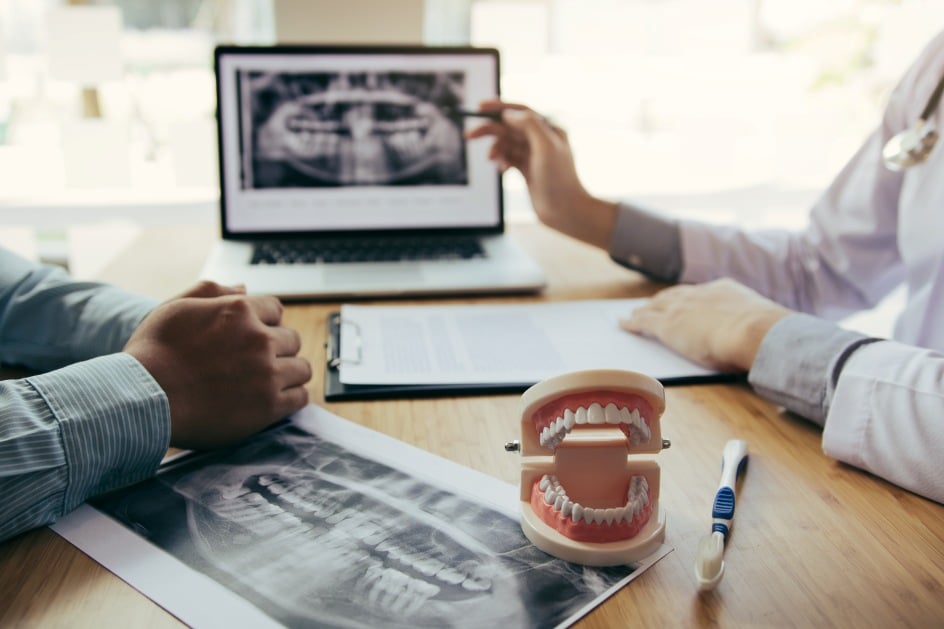
It is possible to place several adjacent teeth on a single dental implant, though most commonly it is used to restore one or two missing teeth. A dental implant consists of a titanium screw that is surgically embedded in the jaw or mandible bone. This screw serves as a base on which an abutment is attached, and then a porcelain crown or a prosthetic bridge is fitted on top. The dental procedure requires the implant screw to fuse with the bone over a certain period before proceeding with further restoration. In cases where two or more adjacent teeth are missing, a prosthetic bridge can be used, connecting multiple crowns on a single dental implant.
Alternatively, the dentist may recommend dentures or other forms of prosthetic restoration, depending on the patient’s individual needs. The decision to choose an implant-based solution should be preceded by a consultation with a dentist, who will evaluate the condition of the teeth and the oral cavity to assess the viability of implant treatment.
When multiple teeth are missing, dentistry offers various solutions, including implant treatment. If two adjacent teeth are missing, one of the best solutions is to place an implant. Implantology allows the restoration of missing teeth without the need to grind down the neighboring teeth.
Traditional dentures can be a solution, but they are often less comfortable than implants. Implant-based treatment provides more durable and stable methods for filling gaps in the dentition. With modern technology, it is now possible to place new teeth where two or three were previously missing. This process consists of two stages: implanting the fixture into the mandible or maxilla, and then mounting the crown, which looks like a natural tooth.
It is worth noting that placing an implant does not require grinding down healthy teeth, as is necessary when fitting a traditional bridge. As a result, natural teeth remain untouched, and the patient gains new teeth that are both durable and aesthetically pleasing. Ultimately, implant treatment is one of the most effective ways to replace missing teeth and restore full oral function.
Therefore, if you are struggling with the absence of two adjacent teeth or more extensive tooth loss, it is worth considering these solutions.
Contemporary medical procedures allow multiple dental implants to be placed during a single session. Depending on the patient’s individual needs and the condition of their jaw or mandible, different techniques can be employed. Placing a single tooth on one implant is typically straightforward. However, in more complex cases requiring the restoration of a larger number of teeth, it may be possible to place two or more implants during the same surgical procedure.
It is crucial to avoid overloading the bone structure; hence, the decision regarding the number of implants should be made by an experienced surgeon. In some situations, rather than multiple single implants, implant-supported bridge techniques are used, allowing an entire dental arch to be reconstructed with fewer implants. For instance, four implants can support more than four teeth.
Proper integration of the implant with the bone is fundamental for long-term success. Thanks to modern technologies and materials, the results can closely mimic the appearance of natural teeth. In contrast to traditional dentures, there is no need for daily removal and cleaning, significantly improving the patient’s oral hygiene. A correctly performed implant-based restoration is an excellent choice for many individuals who want to regain full functionality and aesthetics of their smile.














Uśmiechaj się pewniej każdego dnia
Odkryj, jak nowoczesne technologie i innowacyjne metody leczenia mogą przynieść rewolucję w dbaniu o Twoje zęby. Nasz zespół specjalistów jest gotowy wprowadzić Cię w przyszłość stomatologii
Markiewicz Clinic
ul. Karola Szymanowskiego 2 lok. 6
80-280 Gdańsk
+48 58 558 80 57
[email protected]
znajdziesz nas na:



 Unia Europejska
 +48 58 558 80 57


 osobiście w rejestracji Kliniki,